



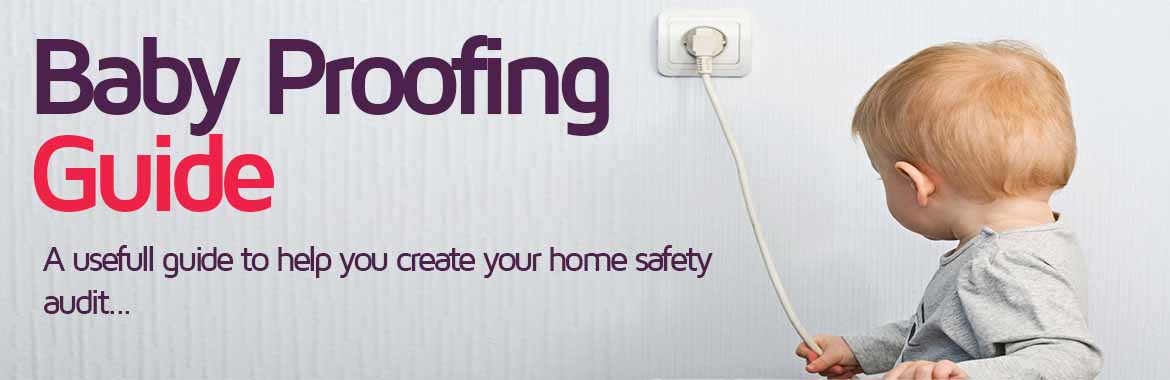
The Complete Babyproofing Guide: How to Make Your Home Safer for Babies & Toddlers
Babyproofing your home can feel overwhelming.
One day your baby is lying exactly where you put them. Then suddenly they can roll, shuffle, crawl, pull themselves up and reach things you were certain were safely out of the way.
That is why the best time to babyproof is before your child reaches the next stage of development, rather than waiting until they demonstrate a new skill.
The HSE points out that most injuries to children under five happen at home and recommends looking at your home from your child's level before they become mobile.
This BabaSafe guide is intended to help you identify hazards you may not have thought about. It isn't simply a list of products to buy. Every home is different, and no collection of babyproofing products can replace good judgement, correct installation and adult supervision.
Let's start with perhaps the simplest babyproofing trick of all.
1. Get down on the floor
Literally.
Get onto your hands and knees and move through each room at approximately your baby's height.
Your home looks completely different from down there.
Look for things a baby could:
- grab
- pull
- climb
- swallow
- knock over
- become trapped in
- burn themselves on
- wrap around their neck
- fall against
Suddenly you may notice a phone charger dangling from a table, a coin underneath the sofa, a sharp hearth corner, a handbag containing medication, a loose blind cord or a piece of furniture that looks surprisingly climbable.
The HSE specifically recommends getting down to child level and working through the home room by room.
And repeat this exercise periodically.
A hazard that is irrelevant to a six-month-old may become fascinating to a twelve-month-old who has just learned to stand.
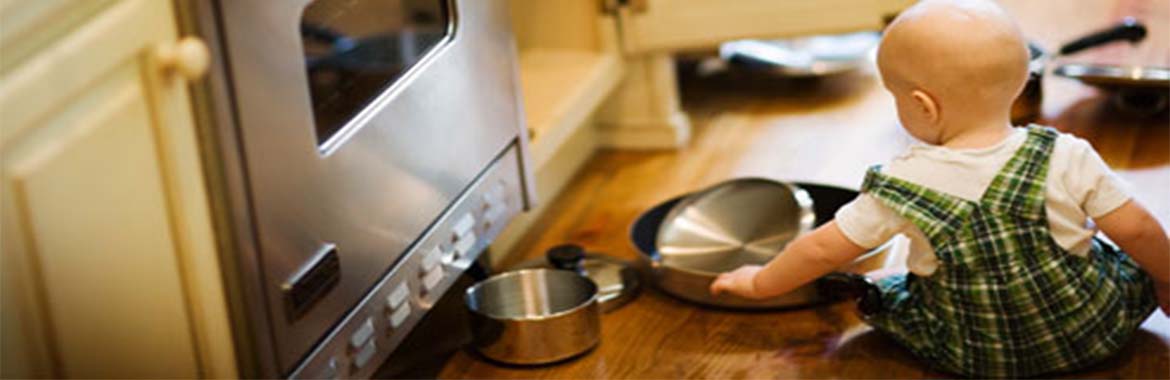
We will start off with the kitchen which tends to be one of the most difficult room in your house to baby proof and presents a multitude of dangers to your child. It is also a room that has a lot of
2. The kitchen: heat, chemicals and climbing
The kitchen is probably one of the most difficult rooms in the house to babyproof.
There are hot surfaces, boiling liquids, knives, cleaning products, electrical appliances, heavy objects and plenty of drawers that toddlers find irresistible.
Hot drinks
Tea and coffee deserve particular attention.
A hot drink can still scald a child up to 15 minutes after it has been poured, including drinks with milk added.
Keep mugs well back from the edge of tables and worktops.
Avoid holding your baby while making or drinking a hot drink, and don't pass hot drinks over a child.
Tablecloths are another easily overlooked hazard. A toddler can pull the cloth and bring everything on the table down with it.
Cooking
Where possible:
- use the rear rings of the hob first
- turn saucepan handles towards the back
- keep children away from the cooker while it is operating
- keep kettle and appliance cables away from the worktop edge
Cupboards and drawers
Cleaning chemicals, dishwasher tablets, washing capsules, medicines, knives and other dangerous products should be stored out of sight and reach, preferably in a high or locked cupboard.
Remember that child-resistant does not mean child-proof.
Also look beyond the obvious hazards.
Plastic bags, cling film, small kitchen gadgets, batteries, vitamins and alcohol can all become accessible once a toddler learns to open cupboards.
Chairs and stools
Ask yourself:
Can my child turn this into a ladder?
A stool that is perfectly safe standing beside the breakfast bar can become a route onto a worktop once a toddler learns to climb.
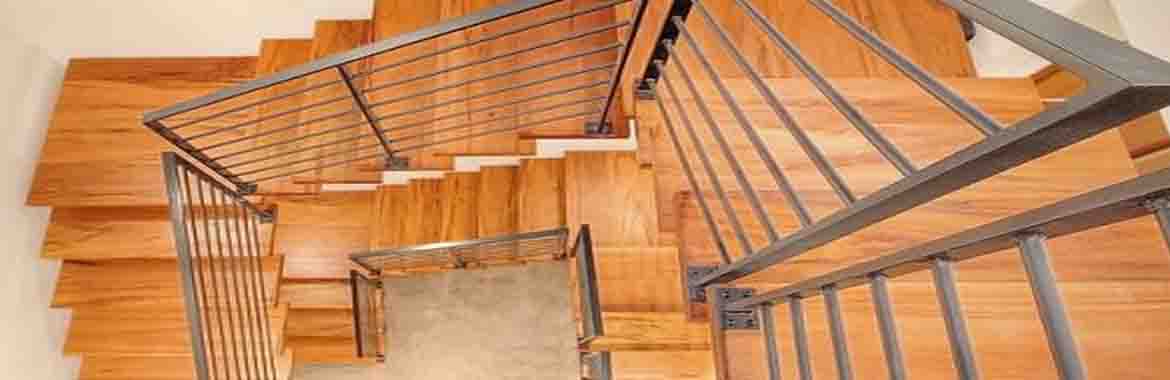
3. Secure the top and bottom of stairs
Falls are one of the biggest household risks once babies become mobile.
The HSE recommends fitting protective stair gates at both the top and bottom of stairs and also considering them around steps, split-level floors and other changes in height.
Choose a gate specifically intended for child safety and suitable for the position in which you intend to use it.
In particular, don't assume that a pet gate or any barrier that happens to fit the opening is automatically suitable as a baby gate.
Correct installation matters just as much as choosing the gate.
Keep stairways clear of:
- oys
- shoes
- laundry
- bags
- other trip hazards
And once your child becomes capable of climbing over the gate, it is time to reconsider whether that barrier is still appropriate.
Landings and bannisters
Look carefully at the landing itself.
A stair gate may prevent access to the staircase while leaving another hazard accessible, such as large gaps in a bannister or furniture that enables a child to climb.
Babyproof the whole area, not simply the stairs.
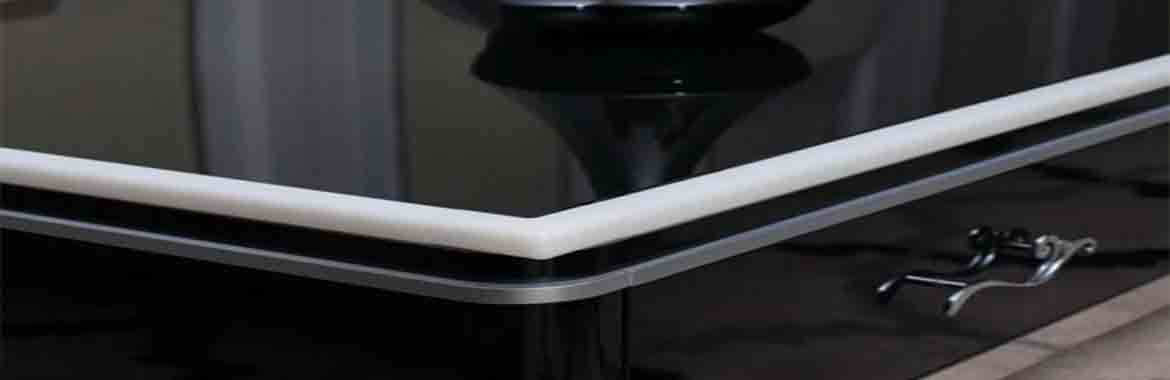
4. Think about what can fall on your child
Modern televisions are lighter and thinner than older models, but that does not necessarily make them safer.
Children climb.
An open drawer can become a step, and several open drawers can turn a chest of drawers into a ladder.
Furniture including:
- televisions
- bookcases
- chests of drawers
- shelving units
- coat stands
- large mirrors
should be assessed for tip-over risk and secured to the wall or floor where appropriate.
Current HSE advice specifically recommends securing freestanding furniture and equipment because falling furniture can cause serious or fatal injuries.
Don't assume something is safe simply because it feels heavy to you.
A child's body weight applied high up on a piece of furniture can change its balance dramatically.
WINDOWS, BLINDS & BALCONIES
5. Windows become interesting when children learn to climb
Keep cots, beds, chairs, toy boxes and other climbable furniture away from windows.
Where required, use suitable window restrictors — but think about fire escape as well as fall prevention.
The HSE recommends restrictors that can be opened without needing a key, spanner or tool in an emergency.
Blind cords
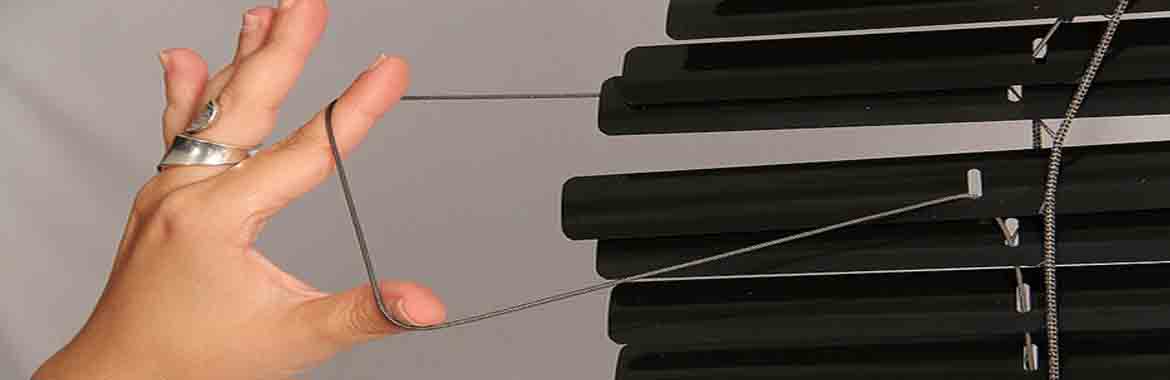
Window blind cords and chains present a potentially fatal strangulation hazard.
The CCPC advises keeping cords and chains out of children's reach and at least 1.6 metres above floor level. Furniture should not be positioned where a child could climb up and gain access to them.
Don't forget other homes.
Check blind cords at:
- grandparents' houses
- childminders
- holiday accommodation
- relatives' homes
Your own carefully babyproofed home isn't the only place your child spends time.
Balconies
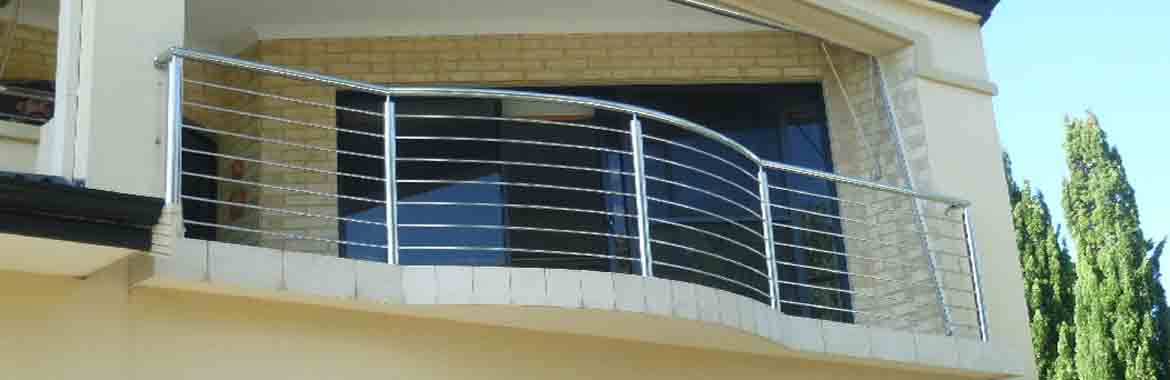
A young child should not be able to access a balcony without adult supervision.
Keep furniture, plant pots, boxes and anything else that could become a climbing aid away from balcony railings.
And remember: toddlers can move things.
A chair does not have to start beside the railing to become a hazard.
6. Check both sides of every door
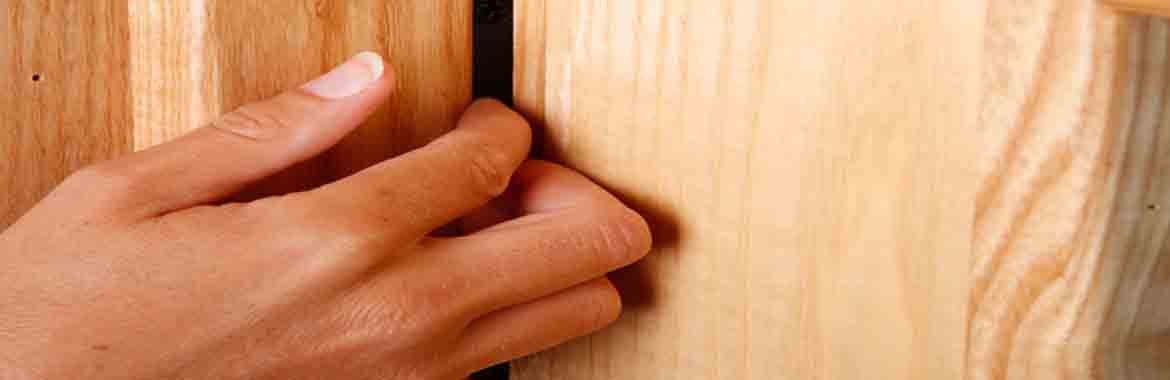
Most of us remember trapping our fingers in a door at some point.
For a young child, however, a heavy door closing onto small fingers can cause a significant injury.
There are actually two areas to consider:
The closing side, where fingers can be trapped between the door and frame.
And:
The hinge side, where the gap can exert enormous pressure as the door closes.
Door stops, slam guards and hinge-side finger protection can all help depending on the particular door.
Also watch self-closing doors and doors that can slam because of draughts.
ELECTRICAL & APPLIANCE SAFETY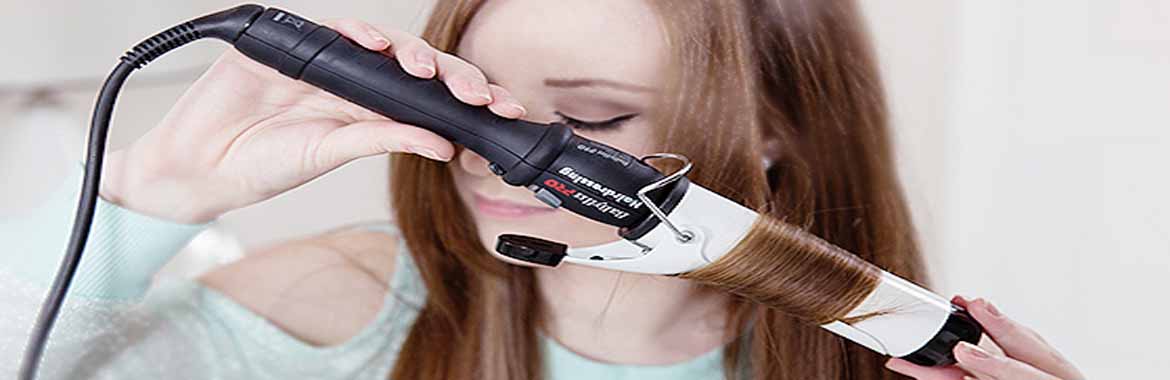
7. Cables are often the bigger attraction
Modern homes contain enormous numbers of chargers, cables and electrical appliances.
Keep electrical equipment and flexes out of your child's reach and unplug equipment when it is no longer required.
Pay particular attention to anything a child could pull down from above:
- kettles
- coffee machines
- lamps
- laptops
- irons
- hairdryers
- phone chargers
A cable hanging from a worktop can effectively become a handle attached to the appliance above it.
Hair straighteners
Hair straighteners deserve special mention.
They can exceed 200°C and may take up to 40 minutes to cool down. The HSE says that most injuries to children involving straighteners happen after the appliance has already been switched off.
Unplug them immediately after use and place them in a heat-resistant pouch somewhere completely inaccessible to children.
Do not leave cooling straighteners on a bed, floor or dressing table where a toddler can reach them.
BUTTON BATTERIES, MAGNETS & SMALL OBJECTS
8. Button batteries: a modern household hazard every parent should know
This is one of the most important additions to our original babyproofing guide.
Button batteries are now found everywhere:
- remote controls
- car keys
- weighing scales
- hearing aids
- calculators
- electronic toys
- LED lights
- musical cards
- flameless candles
- Christmas decorations
They are small enough to swallow but present a danger far beyond ordinary choking.
If swallowed, a button battery can react inside the body and cause severe internal burns, sometimes very quickly.
If you think your child has swallowed one, current HSE and CCPC guidance is clear: go immediately to an emergency department that treats children. Do not wait for symptoms to appear.
Check that battery compartments are secure and cannot be opened by your child.
And remember to secure used batteries as carefully as new ones.
Magnets
Small powerful magnets can also be extremely dangerous if swallowed, particularly if more than one is swallowed and they attract each other through sections of the digestive system.
Treat small magnets with the same level of caution as other serious ingestion hazards.
CHOKING & SUFFOCATION

9. Think beyond toys
Choking hazards are found in every room.
Look out for:
- coins
- small toy parts
- batteries
- jewellery
- bottle caps
- pen lids
- screws
- small decorations
- parts from toys belonging to older children
Make sure toys are appropriate for your child's age and developmental stage, and periodically inspect them for loose or broken components.
The HSE also recommends ensuring battery compartments cannot be opened by children and checking second-hand toys carefully.
Plastic bags and packaging should be kept completely out of reach because they present a suffocation risk.
Food choking deserves separate attention
Food is one of the most common choking hazards.
The way food is prepared matters just as much as what is served.
Follow current HSE guidance for age-appropriate preparation of foods such as grapes and other round or firm foods rather than relying on an old-fashioned universal size rule.
And learn basic first aid for choking.
It's one of those skills you hope you never need — but absolutely want to have if you do.
BATHROOM & WATER SAFETY
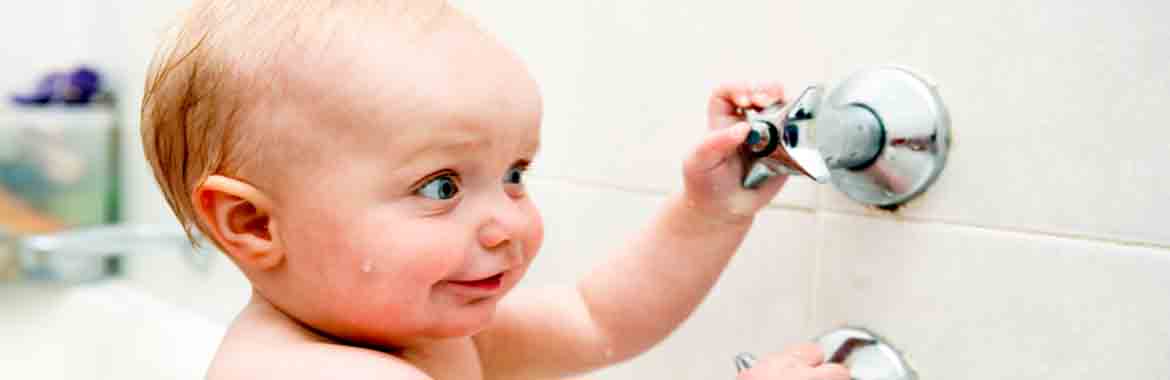
10. A bath needs constant adult supervision
Never leave a baby or young child alone in a bath or around water, even briefly.
A bath seat is not a replacement for supervision. Bath seats can tip and potentially trap a child's head under water.
Empty the bath when you're finished.
Also empty:
- buckets
- basins
- mop buckets
- other containers holding water
Check water temperature
Baby skin is more sensitive than adult skin.
The HSE recommends approximately:
- 36°C for newborn bath water
- 37–38°C for babies and children
and advises setting domestic hot water to below 50°C where possible to reduce serious scald risk.
Bathroom chemicals and medicines
Bathrooms contain an extraordinary number of things children should not access:
- medicines
- razors
- perfume
- mouthwash
- shampoo
- cleaning chemicals
- cosmetics
- toilet cleaners
Store these securely and out of sight and reach.
Don't depend entirely on child-resistant packaging.
FIREPLACES, STOVES & HEATING
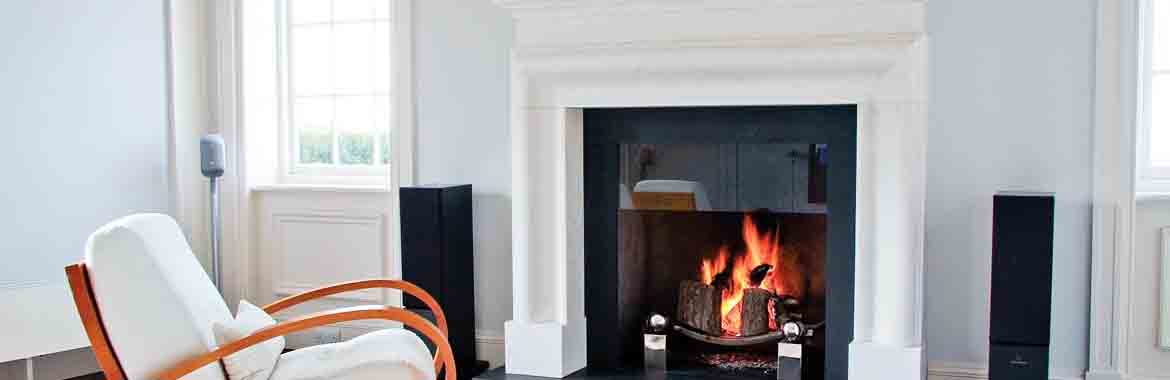
11. Protect the whole fireplace area
Parents understandably focus on flames and hot stove doors.
But one of the biggest physical hazards around many fireplaces is actually the hearth.
Stone, granite and marble are extremely hard surfaces, often with corners at exactly the wrong height for a toddler who is learning to walk.
A properly sized baby fireguard can therefore protect against two different hazards:
the heat source
and
the hard fireplace area around it.
Our BabaSafe Baby Fireguard range is here:
https://www.babasafe.ie/child-safety-products/baby-fireguards-ireland.html
If you're unsure what size or configuration you need, you can send us photographs and measurements here:
https://www.babasafe.ie/get-sizing-help-ireland
A working fireplace also means thinking about:
- adequate distance from the heat source
- radiant heat
- safe wall fixing
- carbon monoxide alarms
- chimney maintenance
- ventilation
And don't assume that every cage-style fireguard or pet barrier is automatically suitable as a child safety barrier.
Radiators and heaters
Keep children away from heaters and other hot appliances.
Where a heat source becomes excessively hot or is easily accessible, consider how the area can be safely restricted rather than simply assuming your child will learn not to touch it.
NURSERY & BEDROOM
12. The cot should be one of the simplest places in the room
Keep your baby's sleep space clear.
Current HSE guidance advises against cot bumpers and says cots, cribs and Moses baskets should be kept clear of pillows, cushions, toys and other unnecessary objects.
Also check what is outside the cot.
Keep the cot away from:
- blind cords
- curtain cords
- monitor cables
- heaters
- radiators
- open windows
- urniture your child may later reach
Never underestimate how far a determined baby can reach through cot bars.
Changing tables
Never leave a baby unattended on a changing table or other raised surface — even if they have never rolled before.
New skills can appear literally overnight.
If you need to answer the door or retrieve something, take the baby with you.
BABY WALKERS
13. One product you are better off without
Traditional mobile baby walkers may look like a way of giving a baby freedom while keeping them contained.
Current HSE advice is much less enthusiastic:
do not use baby walkers.
They can increase the risk of falls and head injuries, and because they allow a baby to move quickly and reach much higher than usual, they can also increase access to hot liquids, medicines and other hazards.
A stationary activity centre or playpen is a safer alternative when used appropriately and under supervision.
VISITORS, GRANDPARENTS & OTHER HOMES
14. Your home isn't the only home that matters
Babyproofing can fail because of something as simple as a visitor leaving their handbag on the floor.
A handbag might contain:
- medication
- cosmetics
- coins
- batteries
- vaping products
- keys
- other small objects
The HSE specifically recommends keeping handbags out of children's reach for this reason.
Think about everyone who uses your home:
- grandparents
- babysitters
- older siblings
- relatives
- visitors
They may need a gentle reminder that the baby can now reach things they couldn't reach a month ago.
And if your child spends significant time in another person's house, do a quick safety check there too.
PETS
15. Babyproof around the animals too
Even the gentlest family pet deserves some thought once a baby becomes mobile.
Keep pet:
- medicines
- food
- treats
- litter trays
- toys small enough to swallow
away from children.
Give dogs and cats somewhere they can retreat to where the baby cannot continually follow them.
And supervise interaction between young children and animals.
The goal is to protect both the child and the pet from situations neither one understands particularly well.
THE FINAL FIVE-MINUTE CHECK
16. Crawl through your home one last time
Once you think the babyproofing is finished, go back to the beginning.
Get onto the floor and move through the house again.
In every room ask:
Can they reach it?
Medicines, chemicals, knives, drinks, candles, electrical items.
Can they pull it down?
TVs, lamps, kettles, tablecloths, cables, shelving.
Can they climb it?
Chairs, drawers, boxes, radiators, balcony furniture.
Can they swallow it?
Coins, batteries, magnets, jewellery, toy parts.
Can they become trapped in it?
Doors, gaps, furniture, cords, blinds.
Can it burn them?
Cookers, hot drinks, fires, stoves, radiators, straighteners.
Can they fall from it?
Stairs, windows, furniture, beds, changing tables.
Can they fall against it?
Hearths, tables, hard corners and sharp edges.
If the answer is yes, decide whether the best solution is to:
remove it, move it, lock it, secure it, block access to it or supervise the area differently.
Babyproof for tomorrow's child — not today's
Perhaps the biggest lesson in babyproofing is that children develop faster than we expect.
The baby who cannot roll today may be rolling next week.
The baby who sits quietly on the floor may soon be pulling themselves onto the sofa.
And the toddler who cannot reach the kitchen counter today may discover tomorrow that a chair works remarkably well as a ladder.
So don't think of babyproofing as a job you complete once.
Think of it as something you review as your child changes.
Products such as safety gates, locks, guards and furniture straps are useful tools, but they work best alongside the things that cost nothing:
attention, preparation and seeing your home through your child's eyes.
You will never remove every possible risk from family life — nor should you try to create a padded cell.
The goal is simpler:
identify the serious and foreseeable hazards, reduce them where you reasonably can, and give your child a safer place to explore, learn and grow.
Current Irish guidance used in this guide
For current child-safety information, parents can also consult:
Health Service Executive (HSE) – Babies & Children / Child Safety
Competition and Consumer Protection Commission (CCPC) – Child & Product Safety
These organisations publish current Irish guidance covering home safety, falls, burns, water safety, choking, button batteries, furniture, blind cords and other hazards.
This guide provides general babyproofing information and does not replace product instructions, professional installation advice, medical advice or appropriate adult supervision.
- END-