babasafe.ie

  • Baby Fire Safety in Ireland: The Invisible Air-Quality Risk from Open Fires and Stoves

    You’ve protected your baby from the fire — but what about the air?

    When parents think about babyproofing a fireplace, the dangers are easy to see.

    There is the flame itself. A hot stove door. The hard edges of the hearth. Sparks from an open fire. And, of course, a curious baby who wants to investigate absolutely everything.

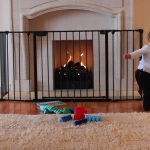
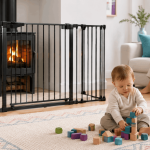
    Installing a properly fitted baby fireguard is an important first step. It creates a physical barrier between your child and the obvious hazards around an open fire or stove.

    But there is another part of fireplace safety that receives much less attention.

    The air inside the room.

    When we burn wood, coal, peat or other solid fuels, we create gases and extremely small particles. Most of them should leave the house through the chimney or flue, but combustion can also affect the air inside the home.

    And unlike a flame or a hot stove, you cannot necessarily see the danger.

    For families using open fires and solid-fuel stoves in Ireland, it is worth understanding what is happening beyond the fireguard.

    Why the air from a fire matters

    One of the main pollutants associated with burning solid fuel is fine particulate matter, commonly called PM2.5.

    These particles are incredibly small. They can penetrate deep into the lungs, and the Irish Environmental Protection Agency links exposure to fine particulate matter with respiratory and cardiovascular health effects.

    This is particularly relevant in Ireland because home heating remains an important source of particulate pollution.

    The EPA states that the main source of fine particulate matter in Ireland is the burning of solid fuel for home heating. It specifically notes that burning fuel in stoves — and especially open fires — can result in unburnt particles travelling through the chimney or directly into the room where the fire is being used.

    Ireland's 2024 State of the Environment Report makes the same point: burning coal, peat and wood in open fires and stoves can affect both outdoor and indoor air quality.

    So this is not simply an outdoor pollution issue.

    Some of the pollution produced by domestic fires can affect the people sitting in the same room.

    Why babies and young children deserve particular attention

    Poor air quality is not good for anyone, but babies and young children deserve a little extra consideration.

    Their lungs and respiratory systems are still developing, and they can spend long periods inside the home during the winter months — often in the very room where the family fire or stove is burning.

    There is also a simpler practical problem:

    A baby cannot tell you that a room feels smoky, stuffy or uncomfortable.

    This does not mean parents should become frightened of using a fireplace.

    A well-maintained heating appliance in a properly ventilated home is very different from a smoky, poorly drawing fire.

    The sensible approach is simply to treat air quality as another layer of child safety.

    We already protect children from the heat source with a baby fireguard. It makes sense to pay some attention to the air around that heat source too.

    Open fires, stoves and the Irish solid-fuel tradition

    Open fires remain a familiar part of Irish homes, particularly in older properties.

    Wood, coal, peat and manufactured fuels have all traditionally been used for home heating here. But from an air-quality perspective, not every form of solid-fuel heating performs equally well.

    The Irish EPA places open fires towards the more polluting end of its home-heating spectrum and encourages movement towards cleaner forms of home heating where possible.

    Irish research demonstrates why this matters.

    An EPA-funded study examining winter air pollution in Killarney, Enniscorthy and Birr found that residential burning of peat, coal and wood was by far the largest source of PM2.5 pollution measured in those locations during winter.

    An enclosed modern stove can generally control combustion better than a traditional open fireplace, but simply owning a stove does not make air-quality considerations disappear.

    The installation, chimney, flue, ventilation, fuel and condition of the stove all matter.

    The EPA has previously highlighted that emissions from stoves can vary depending on the quality of installation, choice of fuel, maintenance and how the appliance is operated.

    So whether you have an old open fireplace or a modern wood-burning stove, good practice still matters.

    Your chimney is part of the heating system

    We tend to look at the fire.

    But much of the important work is happening above it.

    A chimney or flue needs to create sufficient draw to carry smoke and combustion gases safely away from the room.

    When that draw is poor, smoke may escape into the living area rather than travelling cleanly upwards.

    Sometimes the problem is obvious. You may see smoke coming back into the room when lighting the fire or adding another log.

    Other warning signs can include:

    • persistent smoky smells
    • unusual soot staining around the fireplace
    • difficulty getting the fire established
    • a stove that regularly smokes when its door is opened
    • noticeable changes in how the chimney normally draws

    Chimneys can also become restricted by soot, deposits, debris or nests.

    Irish Government fire-safety guidance recommends regular chimney cleaning and gives different suggested frequencies depending on the fuel and appliance being used. It also stresses the need for proper ventilation when using heating appliances.

    The HSE similarly advises families to have their chimney cleaned regularly and to ensure smoke detectors and carbon monoxide alarms are working.

    A chimney that has worked well for years should not simply be assumed to be problem-free forever.

    If the behaviour of your fire changes, investigate why.

    What you put on the fire matters too

    Good combustion begins with suitable fuel.

    Wet wood is particularly problematic because some of the fire's energy must first be used to drive moisture out of the timber. This makes it harder to achieve efficient combustion and can contribute to smoke and deposits within the chimney.

    Irish EPA guidance advises against burning wet timber and recommends properly seasoned wood. It also warns that burning wet wood can contribute to tar and soot deposits within stoves and chimneys.

    Ireland also has national Solid Fuel Regulations designed to reduce pollution from domestic heating fuels. These regulate fuels placed on the market, including requirements relating to smoke emissions and the moisture content of wood products.

    For householders, the practical message is simpler:

    Use the right fuel, keep wood properly dry and do not burn materials that were never intended to go into a domestic fireplace or stove.

    Painted or treated timber, rubbish and inappropriate materials do not belong on the fire.

    And allowing a wood fire to smoulder inefficiently for hours is not the same as achieving good, clean combustion.

    Ventilation matters — even when you want to keep the heat in

    Irish winters give us a very understandable instinct:

    Shut the doors, shut the windows and keep every bit of heat inside.

    But a fire needs air.

    Combustion appliances must receive enough air to operate correctly, and the chimney needs the right conditions to establish proper draw.

    This can become particularly relevant after renovating an older house.

    New windows, additional insulation and draught-proofing can make a property considerably more airtight than it was when the original fireplace was installed.

    Permanent vents provided for a stove or fireplace should therefore not simply be covered because they feel draughty.

    Irish Government fire-safety guidance specifically advises ensuring there is proper ventilation in rooms using heating appliances.

    Kitchen or bathroom extractor fans can also alter air pressure inside a property, so persistent problems with chimney draw are worth discussing with a competent professional rather than simply accepting them.

    A warm house is important.

    So is fresh air and correct combustion.

    Keep babies warm — but don't overheat the room

    A roaring stove can turn a sitting room into a very warm space surprisingly quickly.

    That might feel wonderful to an adult coming in from an Irish January evening, but babies do not need tropical temperatures.

    For sleeping babies, the HSE recommends a room temperature between 16°C and 20°C and advises that a baby should never be placed to sleep beside a radiator, heater or fire.

    The HSE also specifically warns that overheating can increase the risk of cot death.

    The practical lesson is not that your living room has to remain at exactly 18°C all evening.

    It is simply to remember that warmer is not automatically better for a baby.

    A basic digital room thermometer removes much of the guesswork.

    And because fires and stoves produce strong localised heat, think about where your baby's cot, play mat, chair or play area is positioned relative to the appliance — even when a fireguard prevents direct access.

    Carbon monoxide: a different invisible danger

    Particulate pollution is not the same thing as carbon monoxide.

    Carbon monoxide, or CO, is a poisonous gas produced when fuels such as wood, coal, oil or gas do not burn completely.

    It has no smell or taste.

    The HSE lists symptoms of carbon monoxide exposure including headache, dizziness, nausea, tiredness, confusion and breathing difficulties. Children are among the groups identified as being particularly vulnerable.

    Problems can arise from badly installed or maintained appliances, blocked chimneys and flues, or inadequate ventilation.

    That is why every home containing fuel-burning appliances should have appropriate carbon monoxide alarms.

    The HSE recommends a CO alarm in each room containing an appliance that burns gas, oil, coal or wood, while stressing that an alarm is not a substitute for maintaining and servicing the appliance itself.

    And remember:

    A general indoor air-quality monitor is not a replacement for a carbon monoxide alarm.

    CO deserves its own dedicated alarm.

    Can an air-quality monitor tell you what is happening?

    This is where modern technology can be useful.

    Home air-quality monitors are increasingly affordable, and many can measure things such as:

    • PM2.5
    • carbon dioxide or CO₂
    • temperature
    • humidity

    They are not medical instruments, and inexpensive consumer sensors should not be treated as perfectly accurate laboratory equipment.

    But they can be useful for identifying patterns.

    For example, you might notice that particulate levels rise when:

    • you first light the fire
    • you add another log
    • you open a stove door
    • the chimney is struggling to establish a draw

    You may also discover that a room becomes hotter or more poorly ventilated than you realised.

    For families particularly interested in indoor air quality, a PM2.5 monitor can therefore provide useful information about something that is otherwise difficult to see.

    Think of it as an extra set of eyes.

    Not a replacement for proper installation, maintenance or a carbon monoxide alarm.

    A simple Irish fireplace safety routine

    You do not need to turn your sitting room into a laboratory.

    Most of this comes down to straightforward habits.

    Protect against the physical danger.
    Use a properly fitted baby fireguard to prevent children reaching flames, hot stove surfaces and the hearth.

    Keep the chimney maintained.
    Have it swept at suitable intervals for the appliance and fuel you use.

    Burn appropriate fuel.
    Use properly dried wood and approved fuels suitable for your fireplace or stove.

    Keep required ventilation open.
    Do not block permanent vents intended to supply combustion air.

    Watch how your fire behaves.
    Repeated smoke entering the room, unusual soot, persistent smells or deterioration in chimney draw deserve investigation.

    Use smoke and carbon monoxide alarms.
    Check them regularly and replace them according to the manufacturer's instructions.

    Think about temperature.
    Do not position a sleeping baby beside a fire or stove, and avoid overheating rooms used for sleep.

    Consider monitoring the air.
    A PM2.5 monitor is optional, but it can provide useful insight into how your fire affects indoor air quality.

    Fireplaces can still be part of a safe family home

    None of this means an Irish family with an open fire or stove should panic.

    A fireplace can be warm, practical and one of the nicest features of a home.

    The point is simply to think about fireplace safety in a slightly broader way.

    We have become very good at recognising the things that can hurt a child immediately.

    We see the flame.

    We feel the heat.

    We notice the hard hearth.

    And fitting a fireguard for babies and young children is an obvious and sensible response.

    Air quality is easier to forget because most of the time we cannot see it.

    But good fuel, good ventilation, a clean chimney, a properly installed appliance, sensible temperatures and working carbon monoxide alarms are all part of the same job:

    creating a warm home that is also a safer home.

    Protect little hands from the fire.

    And give some thought to the air those little lungs are breathing too.

    Irish sources and further reading

    This article draws principally on guidance and research from the Environmental Protection Agency (EPA Ireland) regarding particulate pollution and domestic solid-fuel heating, including Ireland's 2024 State of the Environment Report and EPA research into residential solid-fuel pollution.

    Baby temperature and carbon monoxide guidance is based on information published by the Health Service Executive (HSE).

    Fireplace, ventilation and chimney-maintenance recommendations also draw on Irish Government fire-safety guidance.
  • EN 1930 Explained: What Irish Parents Should Know About Baby Gate Safety Standards

    When you are buying a baby gate, it is tempting to judge one by fairly simple things.

    Does it feel heavy?

    Does the catch look strong?

    Does it seem difficult for a toddler to open?

    Does the packaging describe it as a baby gate?

    Those things may influence your decision, but they do not tell you whether the product has actually been assessed as a child safety barrier.

    That is the purpose of EN 1930.

    EN 1930 is the recognised European standard covering child safety barriers intended for domestic indoor use. It specifies safety requirements and testing methods for barriers designed to prevent young children from passing through an opening within the home.

    In Ireland, you will normally see the standard referred to as:

    I.S. EN 1930:2011

    In the UK, the same European standard is adopted as:

    BS EN 1930:2011

    The letters are different because the standard has been adopted through different national standards bodies, but both originate from the same European EN 1930 standard.

    For parents, the important point is much simpler:

    A product looking like a baby gate is not the same thing as a product being designed and tested as a child safety barrier.

    What is EN 1930 intended to cover?

    EN 1930 relates to safety barriers intended for domestic indoor use and designed to restrict the movement of young children.

    Typically, this means barriers used around areas such as:

    • doorways
    • stairs
    • rooms that need to be restricted
    • larger openings
    • configurable areas within the home

    The standard is primarily concerned with barriers intended for children up to approximately 24 months of age.

    It does not tell manufacturers that every baby gate must look identical.

    Instead, it establishes safety requirements and methods of testing different designs.

    That allows a conventional stair gate, for example, to look very different from a large configurable barrier while still being assessed against relevant child-safety requirements.

    Why is a recognised standard important?

    Babies and toddlers do not use products gently.

    A child safety barrier may be:

    • pushed
    • pulled
    • shaken
    • leaned against
    • repeatedly opened and closed
    • investigated from every possible angle

    A gate can look extremely substantial in a photograph and still have weaknesses that are not obvious to the customer.

    A recognised standard provides a way of assessing safety using defined tests and requirements, rather than relying on appearance or a manufacturer's opinion that a product is strong enough.

    That is the real value of EN 1930.

    What areas are considered when a child barrier is tested?

    EN 1930 examines considerably more than whether a gate can withstand somebody pushing against it.

    Strength and construction

    The barrier has to maintain its integrity during the relevant tests.

    The frame, joints, fixings and other structural components all contribute to whether the barrier continues performing its intended function.

    The locking system

    A locking mechanism has two competing jobs.

    It needs to be practical enough for an adult to operate, while being sufficiently difficult for a young child to accidentally release.

    The operation and security of the opening system are therefore an important part of child-barrier design.

    Openings and potential entrapment

    Children put fingers, hands, arms and heads into remarkably small or unusual spaces.

    Gaps and openings within a barrier therefore matter.

    The standard considers dimensions and construction features intended to reduce foreseeable trapping and entrapment hazards.

    Climbing and footholds

    A barrier should not unintentionally provide a convenient ladder.

    Height and accessible footholds are therefore important considerations.

    This is one of the reasons the shape and orientation of bars can matter considerably on a product intended for children.

    Sharp areas and projections

    A barrier designed to prevent one accident should not create another.

    Accessible edges, corners, projections and similar construction details are therefore also considered.

    Repeated operation and impact

    Baby gates are working products.

    They are opened and closed repeatedly and subjected to forces throughout their life.

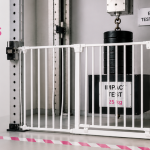
    Testing therefore examines how the product performs under specified loads, impacts and repeated-use conditions.

    Instructions and product information

    Correct fitting forms part of the safety system.

    A good barrier therefore also requires suitable instructions, markings and information explaining how and where the product should be used.

    A dog gate is not necessarily a baby gate

    This is an area where parents need to be particularly careful.

    There are many excellent pet gates and dog barriers available.

    But a product designed to contain a dog is not automatically designed to protect a young child.

    Unless the manufacturer specifically states that the gate is also intended as a child safety barrier and has been tested to the relevant child-safety requirements, you should not simply assume that it is equivalent to a baby gate.

    Pet barriers can sometimes contain features such as:

    • horizontal rails
    • diamond or lattice patterns
    • large openings
    • structures providing potential footholds
    • simple latches designed primarily for pet containment

    A design may be perfectly suitable for its intended purpose while being inappropriate for a toddler.

    There is an important distinction between:

    “This barrier will stop my dog leaving the room.”

    and

    “This product has been designed as a child safety barrier.”

    A gate capable of containing a large dog can certainly look impressive.

    But strength alone does not make something a safe baby gate.

    Take care with traditional fireplace guards as well

    The same principle applies to fireplace products.

    Traditional cage-style fireguards have been used in Irish and British homes for generations.

    Some are designed principally to keep people away from a fire or contain sparks, and there are separate standards relating to domestic fireguards.

    For example, in Britain BS 8423 relates specifically to fireguards for domestic fires and heating appliances.

    That is not the same standard as EN 1930, which deals with child safety barriers.

    A conventional fireplace cage should therefore not automatically be treated as an EN 1930 child barrier simply because:

    • it surrounds a fire
    • it is made from metal
    • it looks strong
    • photographs of babies appear in the advertising

    Traditional designs may sometimes incorporate horizontal sections, mesh, freestanding structures or other features that differ considerably from a purpose-designed child safety barrier.

    If you are buying specifically to protect a baby or toddler, check the actual intended use and the standard the manufacturer says the product has been tested against.

    A picture of a child beside a product is marketing.

    It is not evidence of safety testing.

    Should a compliant multi-panel gate feel completely rigid?

    Not necessarily.

    This is particularly important with large configurable barriers.

    A multi-panel gate uses articulated joints because those joints allow individual sections to be positioned at different angles.

    That flexibility makes it possible to configure a barrier around:

    • large openings
    • fireplaces
    • corners
    • awkward walls
    • unusual room layouts

    The consequence is that a large articulated barrier can naturally have some flex or movement.

    It should not be confused with a solid welded frame.

    Movement may become more noticeable when a barrier is particularly wide or when several sections are arranged in one long straight line.

    Sideways pressure can also create more movement than pressure applied directly towards the protected area.

    The important safety questions are whether:

    • the barrier remains securely attached
    • the wall fixings remain secure
    • the configuration remains in the intended position
    • movement could allow the child to access the protected area

    With configurable systems, the actual shape of the barrier can also affect stability.

    Slightly angling sections can create a more stable footprint than stretching a large number of articulated panels completely straight.

    For certain unusual installations, additional floor supports may also be appropriate.

    Pressure-fit and wall-mounted gates have different uses

    EN 1930 does not mean every type of baby gate is suitable for every location.

    A pressure-fit gate can be extremely convenient.

    It is normally held between two surfaces using outward pressure and may avoid the need to drill into the walls.

    A wall-mounted barrier is mechanically fixed into the surrounding structure.

    Both types can have legitimate uses, but where you intend to install the barrier matters.

    Particular care is needed around locations such as stairs, very wide openings and areas where substantial loads could be applied.

    Always check the manufacturer's instructions to ensure the particular product is suitable for the location you intend to protect.

    The fact that a gate physically fits into an opening does not automatically mean that it is the correct gate for that opening.

    What about using a child safety barrier around a fireplace?

    Using a configurable child barrier as a baby fireguard introduces another layer of considerations.

    The barrier still needs to perform its main function:

    keeping the child out of the protected area.

    However, a working fire or stove also introduces factors that are outside the simple question of whether the gate itself is a suitable child barrier.

    You must consider:

    • distance from the stove or open fire
    • radiant heat
    • whether the child could reach through the bars
    • heat reaching the side panels
    • projecting stoves
    • the position of the hearth
    • hard hearth edges and corners
    • safe wall-fixing positions

    The hearth deserves particular attention.

    For a newly walking toddler, a raised granite, stone, marble or tiled hearth can be one of the hardest collision surfaces in the room.

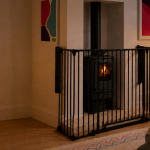
    A correctly sized baby fireguard should therefore generally create a protected area around the whole fireplace zone, rather than simply placing a narrow barrier immediately in front of the flame.

    You can view BabaSafe baby fireguards and configurable options here:

    https://www.babasafe.ie/child-safety-products/baby-fireguards-ireland.html

    Does EN 1930 mean an installation cannot go wrong?

    No.

    This is an important distinction.

    A recognised safety standard provides requirements against which the product can be assessed.

    The customer still needs to install and use that product correctly.

    Problems can be introduced by:

    • unsuitable fixings
    • weak or unsuitable mounting surfaces
    • incorrect positioning
    • brackets installed incorrectly
    • using the wrong type of gate for the location
    • leaving the walkthrough gate open
    • placing furniture beside the barrier that provides a climbing aid
    • allowing the child to reach the hazard through or around the barrier
    • ignoring the manufacturer's installation instructions

    A tested baby gate is an important part of creating a safer environment.

    It does not make installation irrelevant.

    Questions worth asking before buying a baby gate

    Rather than simply choosing the gate that looks strongest, take a few minutes to check what you are actually buying.

    Ask:

    • Is this product specifically intended for young children?
    • Does the manufacturer state the child safety standard against which it has been tested?
    • Are proper installation instructions supplied?
    • Is the fixing system appropriate for my intended location?
    • Does the design avoid obvious footholds or climbing features?
    • Is the locking mechanism designed with young children in mind?
    • Can I obtain replacement parts or technical support if needed?
    • Can I clearly identify the manufacturer or responsible supplier?

    Be particularly cautious when substituting something primarily sold as a dog gate, pet barrier or conventional fireplace cage for a product designed specifically as a child safety barrier.

    They are not automatically interchangeable.

    EN 1930 in Ireland, Britain and Europe

    The different names can make this more confusing than it needs to be.

    The European standard is:

    EN 1930:2011

    Its Irish adoption is:

    I.S. EN 1930:2011

    Its British adoption is:

    BS EN 1930:2011

    These are not three unrelated baby-gate standards.

    They represent national publication of the same underlying European standard.

    That is useful for Irish customers buying products throughout Europe or from British retailers, because you may encounter several versions of the designation.

    The important part to recognise is EN 1930.

    Is a new version of EN 1930 coming?

    Safety standards are periodically reviewed as product designs, testing knowledge and safety expectations evolve.

    As of 2026, EN 1930:2011 remains the current published edition, while work on a revised European standard is underway.

    A draft revision entered the standards-development and consultation process during 2026, with the current development timetable pointing towards a possible new publication during 2027.

    Standards timetables can change before final publication, so manufacturers and suppliers need to follow the development process rather than treating a proposed date as guaranteed.

    For parents buying a gate today, however, there is no reason to wait.

    The relevant question is whether the product has been designed and tested appropriately against the current applicable requirements.

    Why BabaSafe takes the standard seriously

    BabaSafe barriers intended for child-safety applications are designed with the applicable requirements of EN 1930:2011 in mind.

    For Irish customers that standard is encountered as I.S. EN 1930:2011.

    The importance of the standard is not simply the number printed on a specification sheet.

    It represents detailed consideration of things parents may never think to examine themselves:

    strength, gaps, footholds, locking systems, construction, fixings, durability and the way the barrier behaves during use.

    That is why choosing a purpose-designed child safety product matters.

    The simple takeaway

    Parents do not need to become experts in European standards.

    That responsibility belongs primarily with manufacturers, testing organisations and suppliers.

    But understanding the basics helps you distinguish between products that merely look like safety barriers and those actually intended for use around young children.

    Remember:

    A dog gate is not automatically a baby gate.

    A traditional fireplace guard is not automatically an EN 1930 child safety barrier.

    A strong-looking product is not necessarily a tested product.

    And perhaps most importantly:

    Marketing photographs showing babies do not tell you what standard a product has been tested to.

    When the purpose of a barrier is protecting a young child, look beyond the photograph and check what you are actually buying.

  • How to Measure for a Baby Fireguard – Ireland Sizing Guide

    Choosing the right baby fireguard starts with the fireplace itself.

    Every hearth is different. Some are wide and shallow, others project well into the room, and corner stoves or unusual chimney breasts may need a completely different layout.

    The key is to protect the whole fireplace area, not simply the flames.

    View our full Baby Fireguard range:

    https://www.babasafe.ie/child-safety-products/baby-fireguards-ireland.html

    1. Take three measurements first

    Measure in centimetres:

    • The full width of your hearth
    • The depth of your hearth
    • The distance from the heat source to the outer edge of the hearth

    The first two measurements help determine the size and shape of guard you need.

    The third helps you work out how much space will remain between the guard and the actual stove or fire.

    Measure the whole hearth — not just the fire

    A fireplace hearth can be a hazard even when the fire is not lit.

    Stone, marble, granite and tiled hearths are hard, often raised and can have sharp corners at exactly the height where a crawling or newly walking child may fall.

    Where possible, your fireguard should therefore sit outside the complete hearth.

    2. Work out the shape you actually need

    A typical BabaSafe MultiFit installation uses five panels:

    Three across the front

    and

    one returning towards the wall on each side.

    The centre section is normally the 90 cm walkthrough gate.

    For example:

    30 cm panel + 90 cm gate + 30 cm panel

    gives a nominal front width of 150 cm.

    The remaining panels then form the two sides.

    But not every fireplace needs this layout.

    Some fireplaces only need three panels

    Corner stoves can often be protected using a three-panel configuration, particularly where the walls already enclose part of the hearth.

    If the stove or hearth is positioned into a corner, there may be no reason to build a conventional five-panel surround.

    The same basic rules still apply:

    • protect the complete exposed hearth
    • keep the child away from the fire or stove
    • maintain suitable distance from the heat source
    • make sure both ends have suitable wall-fixing positions

    Hearth running into a corner? An L-shaped guard may work

    Some hearths run directly into the corner of a room.

    In this case, an L-shaped fireguard may be far neater than a conventional rectangular arrangement.

    The exposed sides can be protected while the room walls form the remainder of the protected area.

    Other installations may work better with an angled or trapezoid-style layout.

    The important point is:

    Design the fireguard around the area that needs protecting rather than forcing every fireplace into the same shape.

    3. Total panel length is not enough

    Do not choose a fireguard simply because the total combined length of all the panels appears to match the perimeter of your hearth.

    The panels must be the right lengths in the right positions.

    Check separately:

    • the required front width
    • the left-hand depth
    • the right-hand depth
    • where the wall brackets will actually be fitted

    You can have more than enough total panel length and still find that the front is too narrow or that one of the side panels cannot reach the wall.

    For a modular fireguard, the geometry matters more than the total perimeter.

    4. Choose the configuration that best matches your hearth

    For the neatest fit, start with the BabaSafe configuration whose width and depth most closely match the area you need to protect.

    On a normal five-panel setup:

    Three panels make up the front width.

    One panel on each side makes up the depth.

    But corner stoves, L-shaped hearths and unusual fireplaces may need a different arrangement altogether.

    It is generally better for the guard to sit slightly outside the hearth than to leave part of the hard hearth accessible.

    At the same time, do not concentrate so heavily on getting a neat fit around the hearth that you forget about the actual fire or stove.

    Heat clearance matters too.

    5. Use the adjustable angles

    The joints between BabaSafe panels can be rotated and locked at different angles.

    This gives you considerable flexibility around:

    • uneven hearths
    • wide chimney breasts
    • corner fireplaces
    • different left and right depths
    • unusual wall-fixing positions
    • installations where the nominal width is slightly too large

    Angling the panels changes the straight-line distance between the two fixing points without changing the actual panel lengths.

    Angles can also improve stability

    This is particularly useful on wider fireguards.

    A very wide guard arranged in one perfectly straight line can allow more sideways flex.

    Creating some shape by angling the outer sections slightly can give the guard a more stable footprint.

    So the straightest-looking arrangement is not always the best one.

    A slight angle can sometimes improve both the fit and the stability.

    6. Check the distance from the fire or stove

    Once the dimensions work, think about heat.

    There are two things to consider.

    Can your child reach the heat source?

    Your child must not be able to reach:

    • through the vertical bars
    • around either side
    • over the guard
    • towards a projecting stove from an angle

    Children vary in height, reach and ingenuity, so there is no single measurement that can guarantee suitability for every child.

    Look at the finished arrangement from your child's position.

    If they can reach the fire, stove or another dangerously hot surface from any direction, increase the protected area.

    Can the fireguard itself become too hot?

    The guard is made from metal and will absorb radiant heat.

    As a precautionary starting point, BabaSafe instructions recommend approximately:

    75 cm from a stove

    90 cm from an open fire

    These are guidelines rather than guarantees.

    Every fire behaves differently.

    A large stove operating strongly for several hours may produce considerably more radiant heat than a smaller appliance running gently.

    Some installations may therefore need more clearance, while other lower-heat setups may remain safe at a shorter distance.

    When first using the fire with the guard fitted, check the front and side panels during normal use.

    If the guard becomes excessively hot, stop using that configuration and increase the distance from the heat source.

    Always follow the appliance manufacturer's own instructions as well.

    If the fire is never lit

    Some families simply want to keep children away from the hearth, fireplace opening, ash, soot or stove body.

    If the fire genuinely will not be used, heat clearance is no longer the main consideration and you can concentrate on obtaining a neat protective fit around the physical hazards.

    7. Don't forget the side clearance

    It is easy to focus entirely on the width across the front.

    But with many stoves, the side distances matter just as much.

    A stove projecting into the room can radiate significant heat sideways as well as forwards.

    Your side panels therefore need to be long enough to:

    • clear the hearth
    • prevent access from either side
    • maintain suitable distance from the heat source
    • reach the intended wall-bracket positions

    This is particularly important with freestanding or partially recessed stoves.

    It is also another reason why total perimeter alone is not enough.

    8. Allow for the wall brackets

    The wall brackets are part of the finished layout and need to be considered when measuring.

    They add approximately 5 cm at the wall connection.

    Depending on the chimney breast and available wall space, they can normally be fitted either:

    • on the front face of the chimney breast
    • or rotated around the corner onto the side of the chimney breast

    This is especially useful where the hearth extends almost to the edge of the chimney breast.

    If the brackets need to be fitted around the side, make sure the side panels are long enough to reach those fixing points.

    Also check for:

    • skirting boards
    • pipes
    • gas valves
    • sockets
    • decorative mouldings
    • unusual wall shapes

    Inglenook fireplaces

    Do not plan to mount the wall brackets deep inside an inglenook or recessed fireplace opening.

    Heat can become concentrated inside the recess and may make those fixing positions unsuitable.

    The guard should normally be positioned outside the inglenook, with the wall brackets away from the concentrated heat.

    If you have an unusual inglenook or deeply recessed stove, use our sizing-help service and send us photographs and measurements before choosing your configuration:

    https://www.babasafe.ie/get-sizing-help-ireland

    9. Some movement is normal

    The BabaSafe MultiFit is an articulated multi-panel barrier.

    That flexibility is what allows the panels to create different shapes, but it also means that some movement is normal.

    Movement may be more noticeable when:

    • the guard is very wide
    • several panels are positioned completely straight
    • there is no raised hearth behind the guard
    • the guard extends much further than the hearth
    • persistent pressure is applied from the side

    The hearth often helps naturally

    On many installations, the raised hearth sits behind the lower part of the guard and naturally restricts movement.

    Where there is no raised hearth, or the guard extends substantially beyond it, lateral movement may become more noticeable.

    Sideways pressure creates more movement

    Pressure directly towards the fireplace is generally resisted better by the shape of the guard and, where present, the hearth behind it.

    Persistent sideways pressure can create more movement because the articulated joints are being encouraged to change angle.

    Some movement does not automatically mean the guard is incorrectly fitted.

    What matters is that:

    • both ends remain securely fixed
    • the guard remains attached to its brackets
    • the barrier stays correctly positioned
    • movement cannot allow the child to reach the protected area

    Improve stability through the shape

    Before assuming anything is wrong, look at the configuration.

    Adding a slight angle to wider sections can often create a more stable shape than one long straight run.

    Floor brackets are available

    For the relatively small number of installations where additional stability is needed, BabaSafe floor brackets are available.

    They can be particularly useful where:

    • there is no raised hearth
    • the guard is unusually wide
    • the guard extends well beyond the hearth
    • additional control of sideways movement is required

    Floor brackets may not suit every flooring type, so they are an additional option rather than something required with every installation.

    10. Remember the hearth itself

    The fire is only one part of fireplace safety.

    A raised stone or tiled hearth can be one of the hardest surfaces in the room and can have sharp corners and projecting edges at exactly the wrong height for a young child.

    That is why we recommend protecting the whole hearth area, rather than placing a guard tightly around the flames alone.

    The aim is to prevent access to:

    • the heat source
    • hard hearth edges
    • sharp corners
    • ash and soot
    • the fireplace opening itself

    11. Height, climbing and access

    The BabaSafe MultiFit Fireguard is approximately 76 cm high.

    Keep stools, chairs, toy boxes and other objects away from the guard so they cannot become climbing aids.

    Children develop quickly, so review the installation as your child becomes taller and more mobile.

    The MultiFit also includes a walkthrough gate for adult access to the fireplace.

    After lighting, refuelling or cleaning the fire, always make sure the gate is fully closed and locked.

    12. Easy to remove when the fireguard is not needed

    A large fireguard does not have to stay in your living room all year.

    The BabaSafe MultiFit can be quickly released from its wall brackets without dismantling every individual panel.

    Once removed:

    1. loosen or unlock the panel angles
    2. fold the guard into a compact shape
    3. store it away

    The small wall fittings can remain in place.

    When you need the guard again, simply unfold it, reset the angles and mount it back onto the brackets.

    This is particularly useful during warmer months when the fireplace may not be used for long periods.

    Some unusual configurations may require a little more dismantling to fold into their smallest storage size, but the system is designed to make removal and storage straightforward.

    13. Need a larger or custom configuration?

    Because the MultiFit is modular, additional panels can be used to increase the width, depth or overall protected area.

    This is useful for:

    • large hearths
    • freestanding stoves
    • corner fireplaces
    • L-shaped layouts
    • unusually deep hearths
    • asymmetric installations
    • configurations where extra heat clearance is required

    View our full Baby Fireguard range, extensions and configurable options here:

    https://www.babasafe.ie/child-safety-products/baby-fireguards-ireland.html

    Before ordering, check these points

    Make sure you know:

    • your complete hearth width
    • the depth required on each side
    • the distance from the hearth edge to the heat source
    • the front panel width required
    • where the wall brackets will be fitted
    • whether a five-panel, three-panel or L-shaped arrangement works best
    • whether the panels need to be angled for fit or stability
    • whether your child could reach the heat source from any direction
    • whether your particular installation may benefit from floor brackets

    And most importantly:

    Do not choose a fireguard simply because the total panel length appears sufficient.

    The width, depth, angles and fixing positions all need to work together.

    Unsure which size you need?

    If your fireplace is unusual, don't guess.

    Send us your measurements and a photograph of the complete fireplace area, and we can review the layout and recommend a suitable BabaSafe MultiFit configuration.

    Submit your photo and measurements here:

    https://www.babasafe.ie/get-sizing-help-ireland

    You can also browse the complete BabaSafe Baby Fireguard range here:

    https://www.babasafe.ie/child-safety-products/baby-fireguards-ireland.html

    The principles are simple:

    Protect the complete hearth.

    Allow suitable clearance from the heat source.

    Choose the correct geometry — not simply enough total panel length.

    And if you're unsure, send us a photo and measurements and we'll help work out the layout.

  • How to Choose The Right Baby Fire Guard

    Securing the fire at home for our little ones is one of the top priorities for parents in Ireland and probably one of the most obvious baby proofing tasks. Let’s face it, in Ireland we need our heat in almost every month of the year, and in our house even in summer it wouldn’t be unusual to see our stove burning in the evenings if only for a while! There is nothing more frustrating than trying to relax in front of the fire and trying to watch out for your toddler at the same time – not so relaxing. Luckily for us there is such a thing as baby fireguards! And you will likely need one for at least two years so it’s worth making sure you get a good one.

    Baby fire guards are quite different from standard fireguards you might find in a DIY store. A good baby fire guard should cover all the bases that a standard fireguard does not - unmovable, unclimbable, should not over-heat and keep your child away from the fire with 100% confidence. With so many different room styles, room sizes and fireplace/stove types out there it can be a little challenging choosing fireguard that ticks all the boxes, fits well and looks good. We have put together a few things to consider before you go out and buy one.

    Hearth size

    You’re definitely going to want to clear your hearth with the fireguard. Most wood burning stoves and fireplaces sit on a raised hearth stone. The hearth in itself is a safety hazard and poses a collision risk for your toddler with sharp, hard edges and corners. Even if your hearth is set at ground level the fireguard will look a lot better if it clears the stones nicely. Measure the length and depth of your hearth and make sure the fire guard you purchase will surround it.

    Your Space

    There are so many different styles of living rooms and family rooms out there. Extra-large living rooms and hearths in more rural areas are common and if you have the space it is nice to get a larger fireguard, so you can keep logs behind the guard. For smaller living rooms with smaller fires its worth considering a smaller size,so you’re not taking over the room completely!

    Fittings

    Always choose a fireguard that is screw fitted. Anything less and your little one won’t be long figuring out that it can pulled away from the wall. Resist the temptation not to fit the brackets – it will happen. Make sure you choose a design that will clear skirting boards as some brands from overseas cater for houses that don’t use skirting boards. The Babasafe Multifit ticks all these boxes nicely.

    Distance from heat source.

    2 things here. Firstly you don’t want the fireplace or stove to be so close to the edge of the baby fire guard that they could reach in to touch it or even close to it. Be mindful of wood burning stoves that sit out on the hearth or are only half set in the chimney breast. Secondly all fireguards including baby fireguards have a risk of overheating. Every fire is different – some extremely hot, burning for long periods and even some modern stoves can reach incredibly hot temperatures. The recommended precautionary distance from Babasafe is 75 cm for all segments from a stove and 90 cm from an open fire. You may not require this or you may require a greater distance. The key here is to check regularly for over-heating and if you need to increase the distance you can always buy and extension later.

    There are no official regulations on what distance you should have a fireguard from a stove/FIRE  in Ireland and many of the stove manufacturers have individual requirements. We recommend considering the distance to the fire carefully. The fireguard should firstly not be so close to the heat source that your child can reach through the bars and touch the fire from any angle. Normally over 40cm is too far for a child up to 24 months of age to reach.

    Secondly, as the fireguard is made from metal, you should consider the possibility of the fireguard overheating on every panel both front and sides. Every fire/stove is different and the temperature from house to house can vary depending on the kilowatt of the stove and the strength of the fire as well as the length of time the fireguard is exposed to heat. As a precaution in our user manual, we mention the distance from a stove should be 75cm, and the distance from an open flame fire should be 90cm. However, in many homes, this distance is not required and is not even possible due to space limitations and in some homes, more 75cm is required! It is the responsibility of the user to check the guard both initially and regularly to ensure the gate is not getting too hot. We included the over-heat thermometer strip to assist you with this - anything above 40° is considered too hot to touch. If you find your fireguard is over-heating discontinue use immediately and look at extensions from Babasafe to increase the distance.

    Height

    Most purpose built baby fire guards are suitable for children up to 24 months of age and should be at least 75 cm to avoid any climbing hazards. That’s not to say your little one isn’t a budding Bear Grylls and won’t be able to climb it before so keep a watch out. Be aware of furniture sitting close by to the fire guard that it cant be used to climb over. If your room is a little cluttered, consider re arranging and if possible try to choose a size fireguard that fits a little snugger all else considered.


    Other Tips

    • The fireguard should be baby proof and have nontoxic paint.
    • The fire guard should not have any sharp corners. No point in surround the hearth if the fire guard is a collision hazard in itself!
    • The fireguard should have a baby proof door that is large enough for easy access.
    • Buy a baby fireguard that can be folded up and stored when not in use. Nothing worse than having to negotiate a “contraption” sitting in the garage or in the spare room!
    • If you’re a barbecue fan a handy reuse for a baby fireguard is to surround the BBQ during summer.
    • Use edge guards and corner edge guards when not using your fire guard - it will help eliminate the collision hazard.

    Be sure to check out the Babasafe Multifit Fire Guard. Its a purpose designed nursery fireguard that covers all the bases and comes  comes in 6 sizes and you can even get a custom fit.

  • Hidden & Harmful Chemicals for Young Children

    When we think of chemicals harmful to children and young babies, our minds are immediately cast to places like under the sink and in our sheds. Those are the most obvious places and should be kept out of babies reach or locked up using a Basic Cupboard Lock or Value Multi-Lock. But are we really considering all the places in our home where your little one could encounter harmful chemicals and substances? Apart from the obvious and acute safety issues that arise from direct contact with harmful chemicals, there may be other areas in the house that have the potential to cause more long term issues such as cancer, ADHD and other harmful conditions and diseases. Here we run through some of those often overlooked and hidden dangers posed by chemicals in items found around many homes.

    Formaldehyde - A  known carcinogen and skin irritant is Formaldehyde – with the potential to promote various types of cancer and skin reactions and even symptoms like stinging eyes and sore throats. Products that contain Formaldehyde can be found in obvious products such as glue and cleaning products, but also in more hidden places such as beauty products and even pressed wood that's often found in presses and drawers! Steer clear of pressboard MDF products if possible, and avoid any household or beauty products that contain the following:

    • Quaternium 15
    • Bronopol
    • Diazolidinyl urea,
    • DMDM hydantoin,
    • Imidazolidine urea,
    • Sodium Hydroxymethyl Glycinate.


    Bisphenol A (BPA) and Phthalates - BPA (Bisphenol A) is the basic material used in plastics – hard plastics are found everywhere including water bottles, CD’s, car dashboards and even some toys.

    When BPA is absorbed into our bodies it mimics natural hormones such as estrogen and studies have shown that even with low-level exposure can lead to early puberty, increased risk of cancer, depression, and obesity. Studies can be found everywhere on the subject and as a result, BPA is almost never used in baby feeding bottles and baby feeding products. It is certainly worth confirming before purchasing any baby feeding products that they are BPA-free. In addition to this, ensure you take steps the necessary steps that your child's food is heated in BPA-free containers in the microwave and always purchase canned foods or foods storage containers that are BPA-free.

    Another risk of ingesting BPA is through the use and re-use of plastic, disposable water bottles. While many people find these types of water bottles convenient to use, you should never drink water from bottles that have been sitting in your car for a couple days, exposed to heat over a long period of time, or just re-using over and over in general. It's best to use an eco-friendly, washable water bottle to keep yourself hydrated and away from the harmful substance BPA.

    Mercury - is a naturally occurring chemical that is found in water and soil and even air. Exposure to mercury even in very small quantities can cause serious health problems and is a significant threat to a child’s health even during pregnancy. Mercury is considered by the WHO (World Health Organization) as one of the top 10 chemical groups to avoid and can have toxic effects on the nervous, digestive and immune systems. Mercury can be found in products such as thermometers but people are mainly exposed to mercury when they consume shellfish and fish that contain the compound (check out this video with actor Jeremy Piven who fell victim to mercury poisoning from eating seafood below):

    [embed]https://www.youtube.com/watch?v=1tI2OI0fK_A[/embed]


    Arsenic - is well known for its potential to be carcinogenic and has been linked to various cancers including lung cancer, skin cancer, and kidney cancer. Arsenic is all around us as it occurs organically in nature, however, certain foods have higher concentrations. Grape juice and rice are known to contain higher, naturally occurring arsenic as well as the potential for increased levels if inorganic arsenic that have been absorbed from pesticides during agriculture. Of course, rice, rice-based products, and grape juice/grapes can be consumed in limited amounts even on a daily basis but consideration should be given not to over do it on rice and grape-based products at multiple meals throughout the day. Watch out of products such as rice drinks and cereal mixes and keep consumption moderate.

  • Baby Cold & Flu Prevention

    It’s early September in Ireland and while the more optimistic are talking about an Indian summer, I  cant help but notice that all too familiar chill is back in the air!  I’ve packed away the garden set, and fired up the central heating for the first time properly since May – “winter is coming “as the famous saying goes in Game of Thrones and with winter in Ireland there is normally sniffles, sneezes, coughing and sore throats!

    If your new-born makes his or her debut during the colder months it's worth considering  your baby’s first flu or cold and how you might manage avoid it for as long as possible during your child’s early development.

    New-born infants don’t have the immune defence to keep viruses, bacteria and infections  at bay the way adults do and are not only more likely to catch a flu or virus quicker, but are also more prone to having one for longer. Here are some issues and ideas to consider to keep your little one as healthy as possible this winter!


    Vaccinations from birth.

    Vaccinations are a powerful tool at your disposal as a parent and are a really simple and effective way at protecting children against even more serious disease and infection such as measles and Hepatitis. While there are some concerns in Ireland about the side effects of vaccinations on young children it’s commonly accepted that the pro’s far outweigh the cons. There is a recommended time schedule to vaccination from the HSE – In Ireland the first vaccination (for tuberculosis) is given at the maternity hospital just after birth. Timing is very important when it comes to vaccinations and the HSE will ask you to arrange 5 GP visits all the way up until your little one is 13 months old! The first visit should be arranged when your child is 2 months and is the 6 in 1 vaccine to protect against diphtheria, haemophilus influenza b (Hib), hepatitis B, pertussis (whooping cough), polio and tetanus. The PCV vaccine to protect against pneumococcal disease. The vaccines are given in your child’s legs – one in the right leg. Its impressive how organised the HSE is on this subject and they provide a fantastic guide including time tables, vaccination details and what to expect after each vaccination. You can view, download and print the guide here http://www.hse.ie/eng/health/immunisation/pubinfo/babychildimm/parentsguide.pdf


    Avoid Crowds

    It is recommended to avoid crowds during the first two months as much as possible and particularly public transport. If you have ever used the Luas or Dart during winter you will have experienced seeing large amounts of people coughing and sneezing and blowing noses! When you consider the of contact a person has with buttons, hand rails and seats on public transport it’s not hard to imagine how it’s  one of the most common places to pick up a flu or virus. While this might be considered a little OCD - in February 2015 in Ireland we saw near epidemic levels of flu outbreak, which caused havoc in hospitals and with emergency services with GP’s even warning that their surgeries had not been as busy in over 10 years. Keep in mind that an Infection or virus that may be barely noticeable for an adult, could be much more easily picked up and felt for much longer for an infant. Keeping your new-borns exposure to situations like this at minimum is the best approach until they have had a chance to have their full course of vaccines and have built up their own immune system.


    Breast Milk

    A mother’s breast milk provides all the nutrition your child needs to grow strong and healthy but also contains a huge amount of immune boosting qualities for your baby including antibodies and white blood cells. The presence of these substances in breast milk provide a natural defence against a range of infections and viruses during breast feeding and long after.

    Of course breast feeding with a virus or cold will could result in passing it on to your child- but the antibodies that a mother produces to combat the infection will also be transferred to the baby and will give them them the defence they need to fend of the cold or possible prevent the cold from catching or even from developing at all.

    At Babasafe Ireland we are strong supporters of breast feeding and it's benefits and urge all parents to breast feed for as long as possible as baby formulas simply don’t offer the  of protection that can be given through natural breast milk. Check out www.breastfeeding.ie – a fantastic Irish website dedicated to informing, guiding and encouraging Irish mums to breast feed.


    Be Selective, it’s a VIP list!

    You have to be a bouncer the first 6 months! Visitors can come in their droves when a baby arrives home for the first time! As tough as it may seem it’s super important to screen those coming to  the house from the onset to ensure that none of them are bringing home aflu or cold that could be passed on to your infant.

    Watch out for older kids who love to touch and cuddle new-borns! Kids nearly always bring home infections and colds from school and pre-school and as cute as it may be, it’s best to stop them from doing so in the early stages. After all the average kid gets up to  8 colds a year particularly while in preschool and crèche.


    Kill Germs

    It seems obvious but keeping your hands and surfaces that you and your child come into contact with clean will greatly reduce the spread of viruses & bacteria.

    • Put hand sanitizer in the nursing bag and have a few bottles at home for when visitors come Hand sanitizers are as effective as washing your hands at killing germs , keeping a bottle just inside the door will remind you and those arriving to use it.
    • Be aware germ danger areas around the house and even when you’re out. Use anti-bacterial wipes to wipe down door handles. Mobile phones, iPads and toys!
    • Watch out when you visit the doctor’s surgery or paediatrician’s office - It’s easy to flick through the magazines or allow your child to play with toys in the waiting room! Most surgeries have sanitizers provided but considering the number of people arriving through a typical GP’s surgery with a flu or cold its worthwhile being vigilant!


    - END-

6 Item(s)

google94e1bd818f8138aa.html